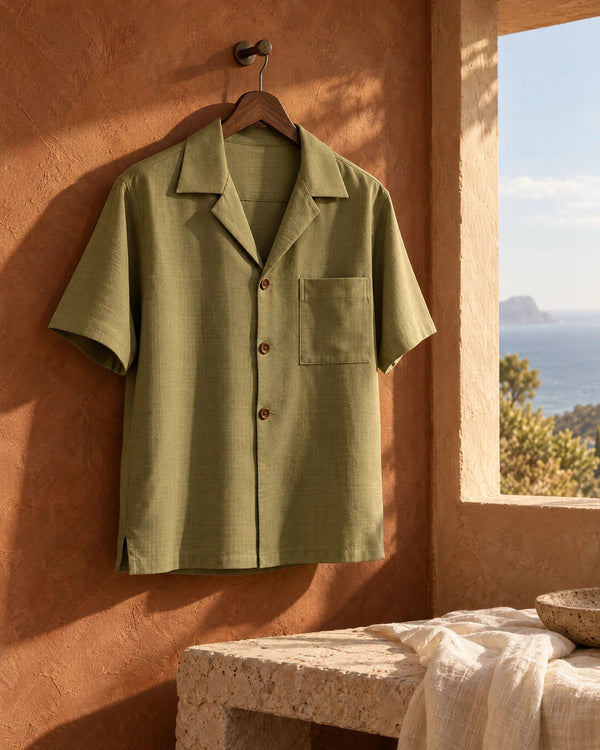

Colour usually catches the eye first. Spend a little longer with the cloth and the choice becomes much more interesting.
A fabric belongs to a finished garment, a particular cut and a person who will wear it. Start with that whole picture. Two options may look close on a screen while asking different things of your wardrobe and your routine. The most useful question is how a particular option supports the garment you want to live in.
Where will this piece spend its time?
Describe a likely day rather than an imagined occasion. You may be indoors for most of it, walking between appointments or moving between several settings. Note what you normally wear underneath and over the piece. These details give a conversation about fabric a practical starting point and help you explain your expectations clearly.
What do you want to see and feel?
Look at the surface as well as the shade. Would you enjoy a visible texture, a smooth appearance, a clear pattern or something more restrained? Consider the other pieces beside it. A shirt with a strong print might become the centre of the outfit; a quieter surface can give more room to the cut and the surrounding layers.
Photographs are useful for understanding appearance, but a screen cannot tell you exactly how a cloth feels in your hand. If touch, thickness or a subtle shade will decide the choice, raise that question before production. Ask what information or a closer view can be provided for the exact option you are considering.
What does the description actually establish?
Read the information attached to the selected fabric. Composition, a named mill or supplier, and any documented characteristics belong to that particular option. Carry those facts through to your decision. A statement about one cloth should never quietly become a promise about every material available for the same model.
For de Hoogh, the available selection depends on the garment. Where an Included collection and optional Signature fabrics are offered, compare the specific choices and any stated supplement. Treat the distinction as an invitation to look more closely. The right choice still comes back to the piece, your preferences and the information available.
Will the care suit your routine?
Make care part of the conversation while choosing. If you need a particular cleaning method, say so and request confirmation for the finished garment. A fibre name alone is not a complete care instruction. The construction and other components also need to be considered, and the garment's verified care guidance remains the reference.
Write down the final choice.
Keep the exact fabric selection with your design notes. Add any questions that are still open. During the personal review, those details make it easier to confirm what you have chosen and what needs clarification. A considered fabric decision is often the result of several small, precise observations coming together.